Why you do not have to weigh everything
Weighing food is precise but easy to give up on. If estimates help you keep logging, they will usually tell you more over a month than a perfectly weighed week followed by nothing. Small errors tend to be similar from day to day, so your trend still shows whether your intake is moving in the right direction.
Use your hand as a rough guide
Your hand is always with you and scales roughly with your body size. These are rough visual guides, not exact measures:
| Food type | Visual guide |
|---|---|
| Meat, fish, tofu | About the size and thickness of your palm |
| Rice, pasta, cereal | About a clenched fist, cooked |
| Vegetables, salad | About two cupped hands |
| Cheese | About the size of two thumbs |
| Oils, butter, nut butter | About the tip of your thumb per teaspoon |
Use household measures and packaging
Spoons, cups, slices and pieces are useful units. “One tablespoon of peanut butter” or “two slices of toast” is easier to estimate than a weight. Packaged foods carry nutrition labels, so check whether the figures are per 100 g or per serving and log the amount you actually ate.
With CutWise you can scan a barcode to look up a packaged product, then set your portion.
Describe meals in detail
When you log by text or voice, more detail gives a better estimate. “Chicken sandwich with mayo on two slices of sourdough” is far more useful than “sandwich”. Include sizes, cooking methods and extras when they matter, then review the breakdown before logging.
Let a photo give you a starting point
A meal photo can suggest the foods and portions on your plate. It works best with a clear, well-lit shot of the whole meal, and you should still add hidden ingredients and adjust portions. See how to track calories from a photo for tips.
Watch the calorie-dense extras
Estimation errors matter most for foods that pack a lot of energy into a small amount. A tablespoon of oil is roughly 120 kcal, and a generous pour can be several times that. Give extra attention to:
- Cooking oils, butter and dressings
- Nuts, seeds and nut butters
- Cheese
- Sugary and milky drinks, juices and alcohol
- Sauces and spreads
Leafy vegetables, by contrast, have so few calories that rough estimates make little difference.
Save the meals you eat most
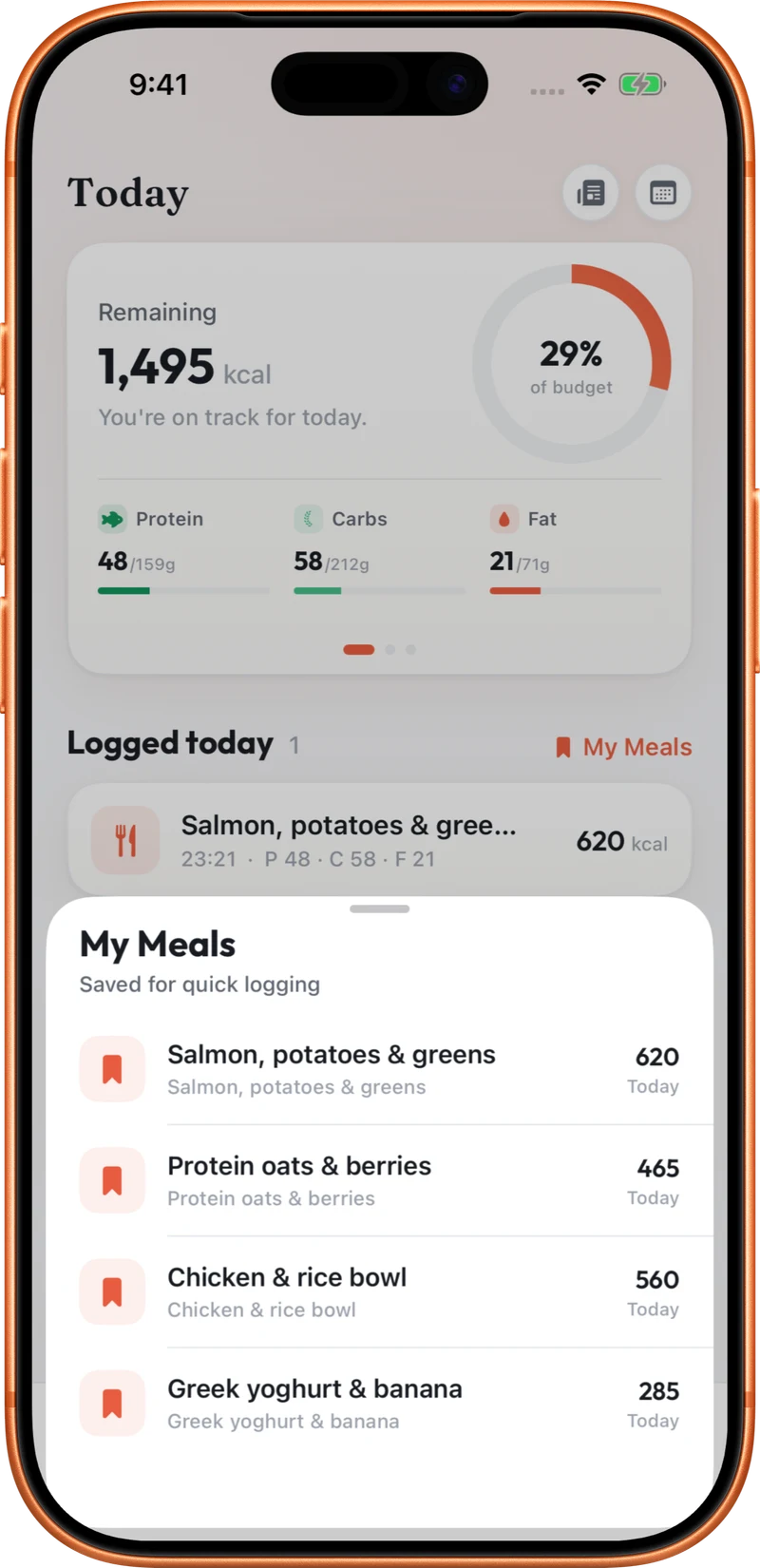
Most people eat a fairly small set of meals. Once you have a good estimate for your usual breakfast or lunch, save it and reuse it. Fewer fresh estimates means fewer chances for error, and logging takes seconds.
Check your estimates against your trend
After a few weeks of consistent logging, compare your average intake with your weight trend. If the trend does not match what your numbers suggest, look first at the calorie-dense foods above. You can also use the calorie calculator to revisit your target.