Ask around and you’ll hear anything from 50 g of protein a day to 250. Both ends come from real sources. The low end is the UK’s official reference intake; the high end is what lean bodybuilders eat before a competition. Most people need something in between, and where you land depends on one question: what are you trying to do?
The official number is a floor
The UK reference nutrient intake for adults is 0.75 g of protein per kilogram of body weight a day: about 53 g for a 70 kg person.5 It’s set high enough to cover the basic needs of nearly everyone, and most people in the UK already eat more than it.
What it isn’t is a target for building muscle, keeping muscle while you lose weight, or staying strong as you age. For those, the evidence points higher.
If you train: about 1.6 g per kilo
The best single piece of evidence is a 2018 meta-analysis that pooled 49 trials and 1,863 people doing resistance training.1 Adding protein increased gains in muscle and strength, but only up to a point. Beyond about 1.6 g per kilo of body weight a day, extra protein made no further measurable difference to muscle gained.
That 1.6 is an average with real uncertainty around it: the turning point could plausibly sit anywhere from about 1.0 to 2.2 g/kg. So 1.6 is a sensible default, and 2.2 is a reasonable ceiling for anyone who wants to be sure they’re not leaving anything on the table.
Fig. 1Protein helps muscle grow, up to a point
Two other findings from the same analysis are worth knowing. Extra protein helped trained lifters more than beginners, and it helped less as people got older. Training is still the main thing; protein lets you make the most of it.
If you’re losing weight: towards the higher end
In a calorie deficit your body is more willing to break down muscle for energy, and protein is one of your best defences, alongside lifting weights. It also helps with hunger: protein is the most filling of the three macros, calorie for calorie.
A widely cited review of lean, trained athletes dieting hard suggested 2.3 to 3.1 g per kilo of fat-free mass, scaled up the leaner you get and the harder you diet.2 That’s fat-free mass, not body weight, and the advice is aimed at people getting very lean. For most of us, 1.6 to 2.2 g per kilo of body weight covers it.
If you’re over 65: more than you’d think
Ageing muscle responds less to the same dose of protein, and losing muscle and strength is one of the main things that makes later life harder. An international expert group recommends 1.0 to 1.2 g per kilo a day for healthy older adults, and more during illness or recovery.3 That’s around 50% above the general reference intake, and many older people fall well short of it.
Your number, in grams
Here’s what those ranges mean for common body weights. Pick the column that matches your goal.
| Body weight | Minimum (0.75) | Over 65 (1.2) | Training (1.6) | Upper end (2.2) |
|---|---|---|---|---|
| 60 kg | 45 g | 72 g | 96 g | 132 g |
| 70 kg | 53 g | 84 g | 112 g | 154 g |
| 80 kg | 60 g | 96 g | 128 g | 176 g |
| 90 kg | 68 g | 108 g | 144 g | 198 g |
| 100 kg | 75 g | 120 g | 160 g | 220 g |
The 30 g per meal myth
You’ve probably heard that your body can only use about 25 to 30 g of protein at once and the rest is wasted. A 2023 study tested that directly. After a workout, people were given 25 g or 100 g of protein, with tracers to see where it went. The 100 g dose produced a larger anabolic response that lasted more than 12 hours, against a shorter one for 25 g.4 Your body doesn’t throw protein away; a big dose is just used more slowly.
Hit your daily total. How you split it matters far less than whether you get there.
Spreading protein across three or four meals is still a good idea, but for a practical reason rather than a physiological one: it’s much easier to reach 130 g in four portions of 30-odd than in one heroic dinner.
Hitting it with ordinary food
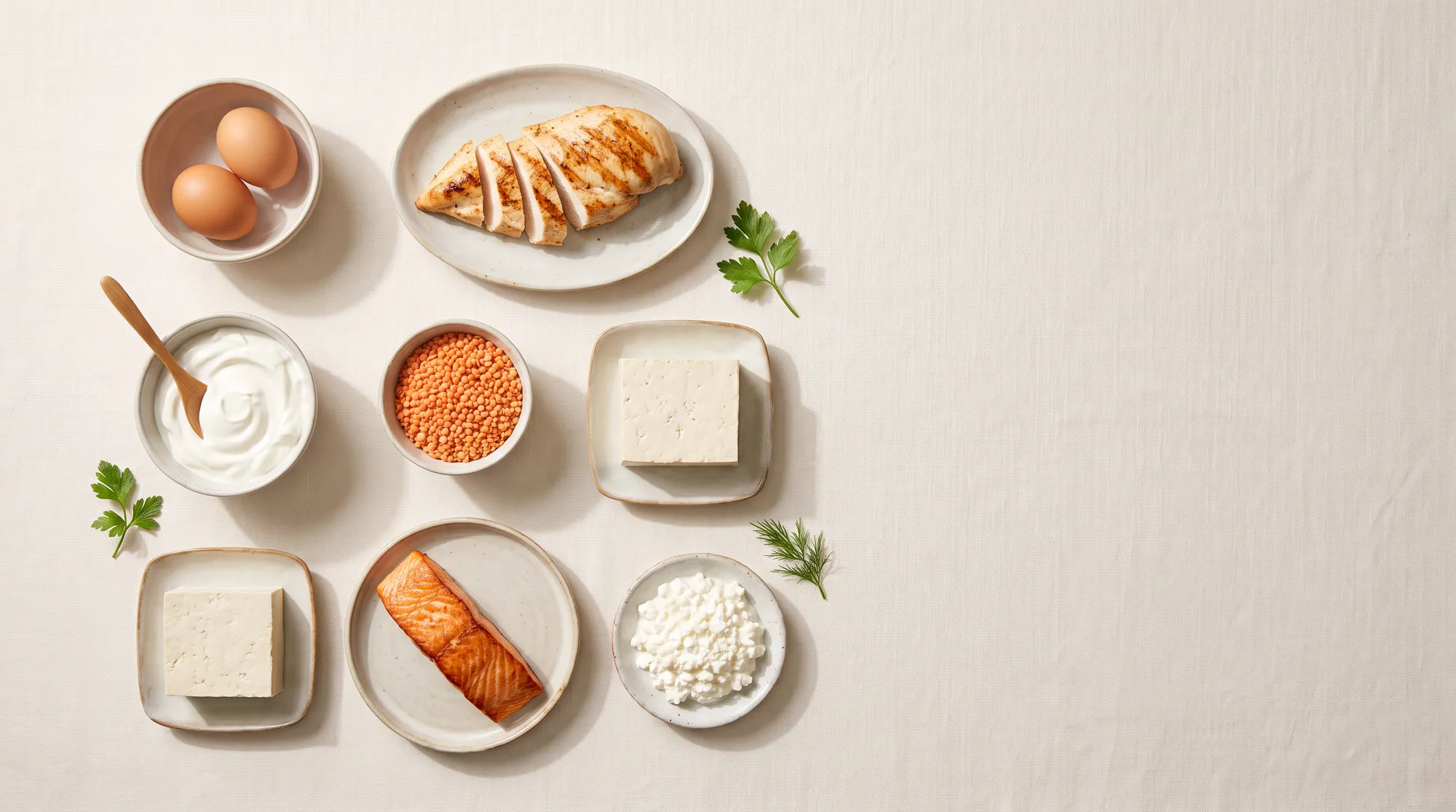
The foods that make a target easy are the ones with a lot of protein for their calories. That matters most when you’re in a deficit, where every calorie has to work.
Fig. 2Protein per 100 calories
A day that reaches about 120 g without anything unusual might look like this:
| Meal | What | Protein |
|---|---|---|
| Breakfast | 200 g 0% Greek-style yoghurt, 40 g oats, berries | 25 g |
| Lunch | Tuna sandwich: one tin of tuna, two slices of wholemeal bread | 33 g |
| Afternoon | A large latte with semi-skimmed milk | 10 g |
| Dinner | 150 g cooked chicken breast with rice and vegetables | 54 g |
| Total | about 122 g |
Plant-based? Tofu, tempeh, lentils, edamame, seitan and soya milk all count. Plant foods tend to deliver less protein per calorie, so it takes a little more planning, but the daily total is what matters.
Is that much protein safe?
For healthy adults, intakes in the ranges above haven’t been shown to cause harm, and they’re common among people who train. The exception is anyone with kidney disease, who is usually advised to eat less protein, not more. If that’s you, or you’re unsure, talk to your GP before changing your diet.
The short version
- 0.75 g/kg prevents deficiency. It isn’t a target for muscle or fat loss.
- If you lift, aim for about 1.6 g/kg a day; up to 2.2 if you want to be sure.
- Losing weight, aim towards the top of that range, based on your goal weight if you have a lot to lose.
- Over 65, aim for at least 1.0 to 1.2 g/kg.
- Hit the daily total; the per-meal limit is a myth.
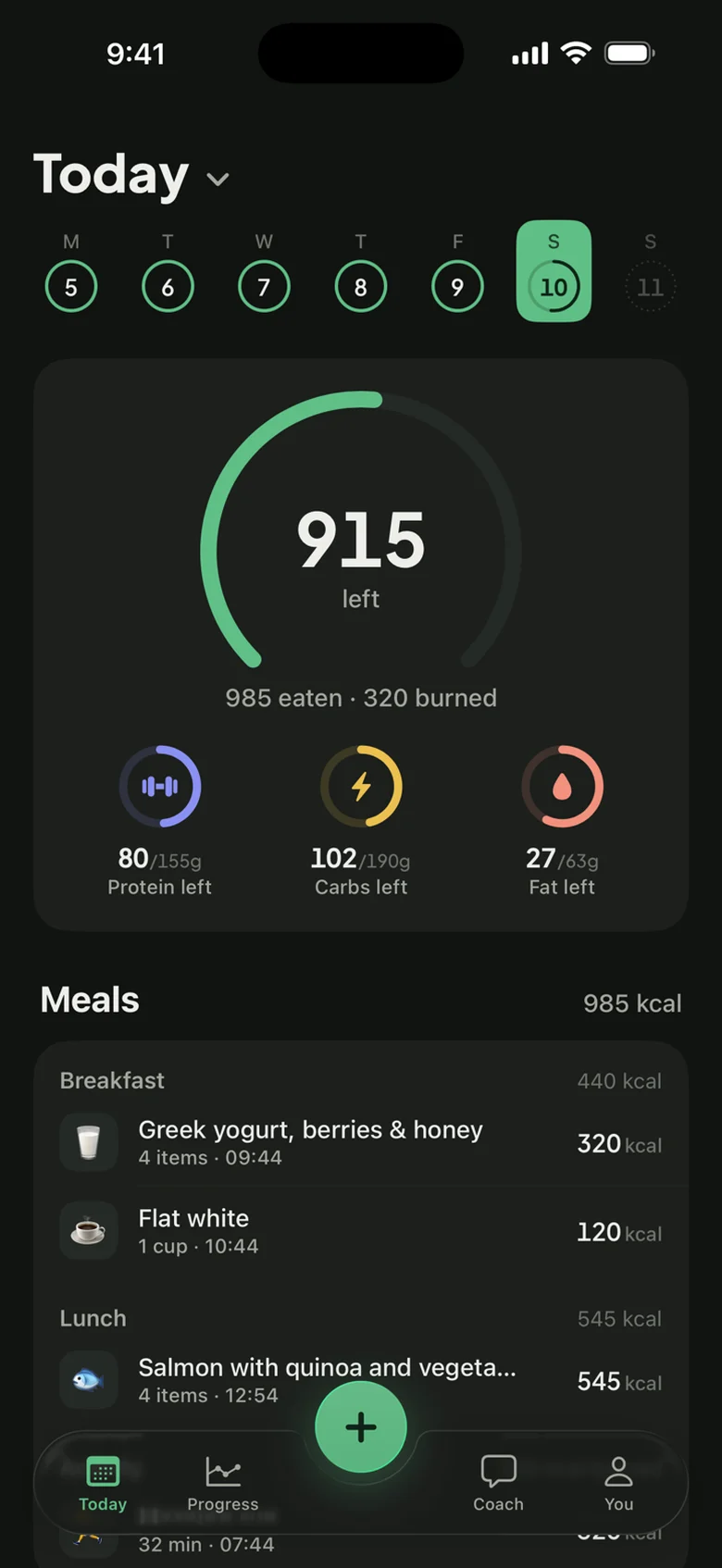
If you want a starting point for calories and macros together, the macro calculator starts at 1.6 g/kg, sets protein first and builds fat and carbs around it.