A kilo of body fat holds roughly 7,700 kcal of energy. To gain a kilo of fat overnight, you would have to eat about 7,700 kcal more than you burned in a single day: roughly four days’ worth of food on top of your normal intake. So when the scale says you’re a kilo heavier than yesterday, it’s almost never fat. It’s water, food and timing.
Your body is about 60% water, and the amount it holds moves around by a litre or two from one day to the next. The scale can’t tell the difference between water and fat. Once you know what drives the swings, you stop reacting to them.
What actually moves the number
Carbohydrate, and the water stored with it
Your muscles and liver store carbohydrate as glycogen, typically a few hundred grams of it. Each gram is stored with at least three grams of water, and sometimes considerably more.1 So a carb-heavy day that tops up your stores can add more than a kilo, while a few lower-carb days can take it off just as quickly.
This is also why the first week of almost any diet looks spectacular. Eat less, and especially fewer carbs, and you use up glycogen and lose the water bound to it. Some of that early drop is real fat, but a lot of it is water, and it comes back the first time you have a pizza.
Salt
Your body keeps the concentration of sodium in your blood within a tight range. A salty meal, a takeaway or a restaurant dinner makes you hold extra water to dilute it, and the scale shows that water the next morning. It goes again over a day or two once your salt intake settles.
What you’ve eaten and drunk
Food and drink weigh something before they’re digested. A big dinner and a few drinks can easily be half a kilo or more still working through your system the next morning. This isn’t gain of any kind; it’s just timing.
Your menstrual cycle
In a year-long study of 62 women and 765 cycles, fluid retention was lowest in the first half of the cycle and peaked on the first day of the period.2 Many people see their weight rise in the days before their period and fall back after it. Compare this week with the same point last month, not with last week.
The weekend
A Finnish study of 80 adults and more than 4,600 morning weigh-ins found a clear weekly rhythm: weight rose over the weekend, peaked on Sunday or Monday, and fell through the week to a low on Friday or Saturday.3 The people who lost weight over the study weren’t the ones with no weekend bump. They were the ones whose weekday dip more than undid it.
Fig. 1What’s in an overnight 1.9 kg jump
Read the trend, not the day
If day-to-day weight is mostly noise, the fix is to average it out. Weigh yourself in the same conditions each time (after waking, after the loo, before eating or drinking) and look at a smoothed trend rather than any single reading.
The simplest version is a seven-day average. A better one, popularised by John Walker’s Hacker’s Diet, is an exponentially smoothed trend: each day, the trend moves a fixed fraction of the way towards today’s weigh-in.4 A single odd reading barely moves it, but a real change shows up within a week or two.
Fig. 2Six weeks of weigh-ins, and the trend underneath
A single weigh-in tells you about yesterday. The trend tells you about the last three weeks, which is what you actually want to know.
How long until you can trust a change?
Day-to-day swings of a kilo either way are normal. A real loss has to build up past that noise before it shows on the scale with any confidence. The slower you’re losing, the longer that takes:
| Real rate of loss | Total after 2 weeks | Clear of a ±1 kg daily swing after |
|---|---|---|
| 0.25 kg a week | 0.5 kg | about 4 weeks |
| 0.5 kg a week | 1.0 kg | about 2 weeks |
| 0.75 kg a week | 1.5 kg | under 2 weeks |
That’s why changing your plan after a bad week is almost always premature. Give any change at least two to three weeks of consistent logging before you judge it, and judge it on the trend.
How CutWise shows it
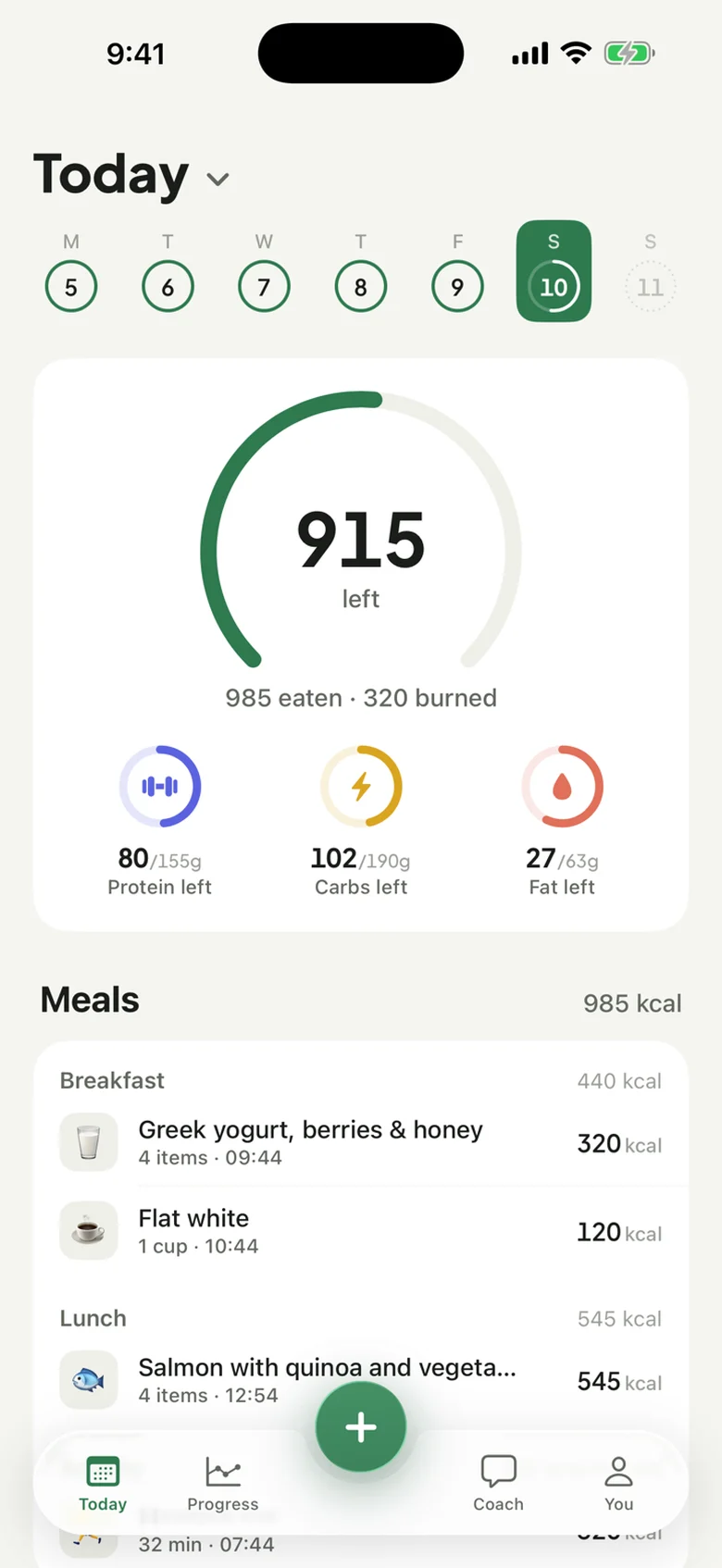
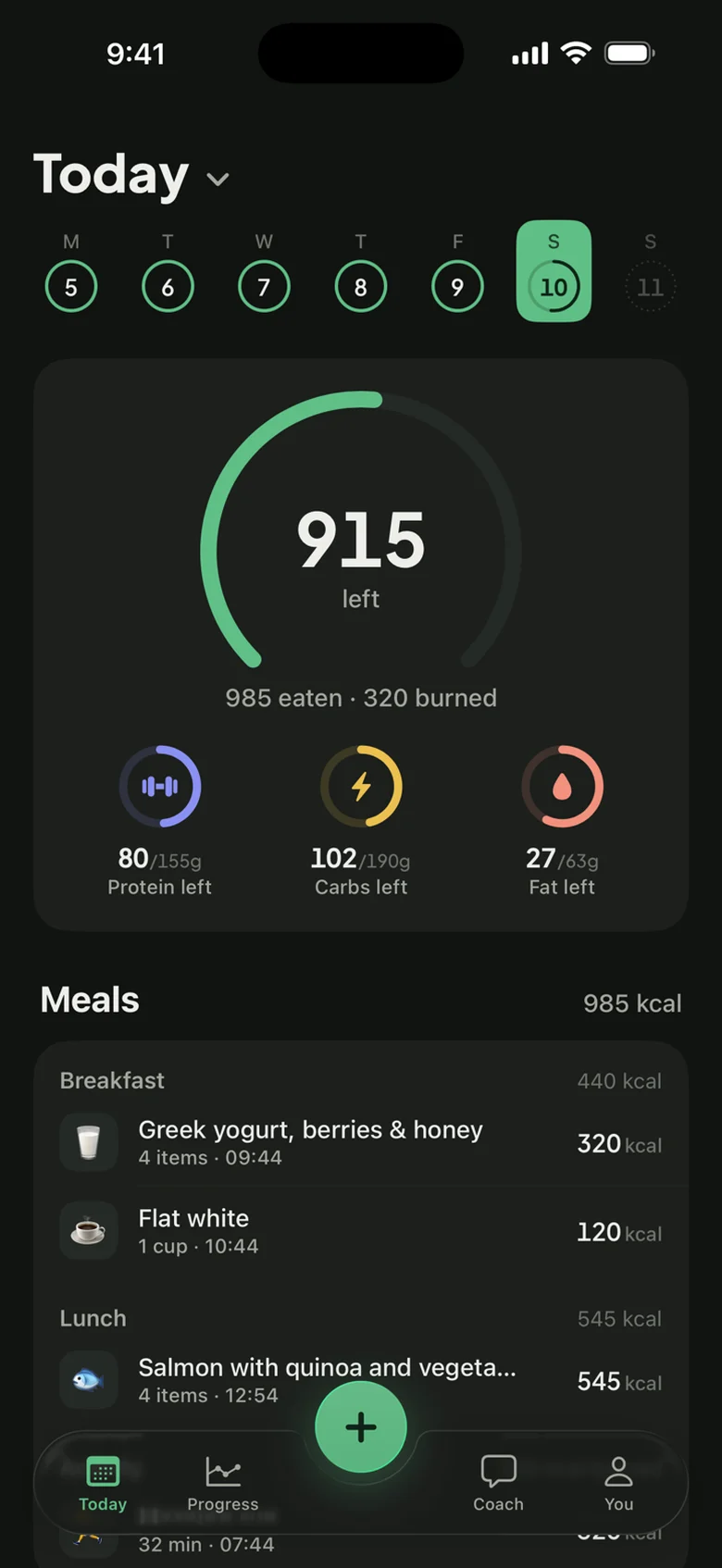
Tap the Weight card in CutWise and you get your weigh-ins with a smoothed trend underneath, plus your pace towards your goal. The trend is designed to follow a real change quickly without chasing every salty dinner, and weigh-ins from Apple Health come in automatically. The daily dots are still there. You just don’t have to take them personally.