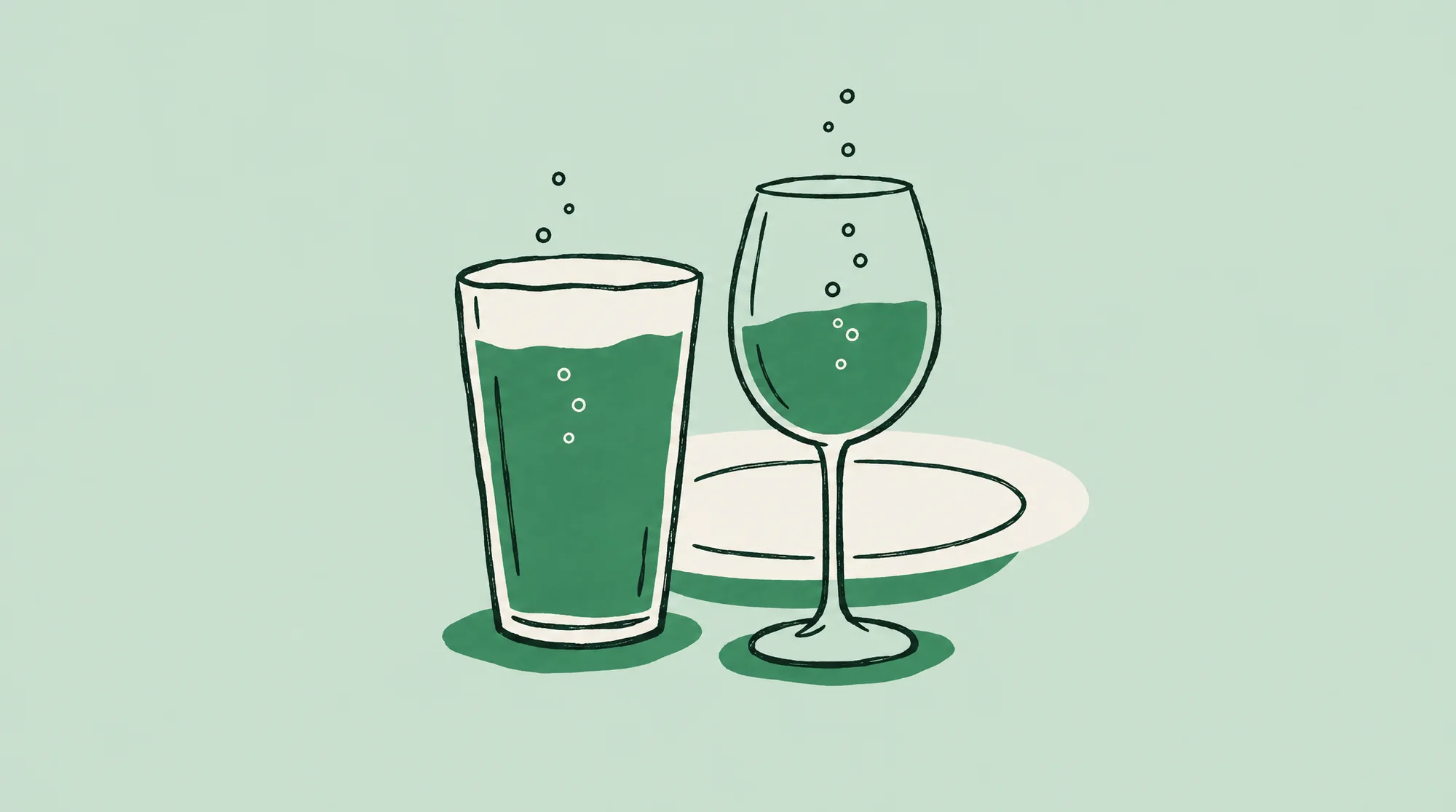
Alcohol is the one thing most of us drink that has almost as many calories per gram as fat: about 7 kcal, against 9 for fat and 4 for protein or carbohydrate.1 It arrives as a liquid, so it doesn’t fill you up, and it rarely makes it into a food log. That combination makes it the most underestimated part of many people’s week.
What your drinks actually contain
A UK unit is 10 ml, or about 8 g, of pure alcohol, so every unit carries roughly 56 kcal from the alcohol alone. Beer, cider and mixers add carbohydrate on top. Typical figures:
Fig. 1Calories in common UK drinks
Individually those look modest. They stop looking modest when you add up a normal evening, and add the food that tends to come with it.
Fig. 2An ordinary Friday night
What alcohol does to fat burning
Your body treats alcohol as something to get rid of, not something to store. While it’s clearing it, it burns the alcohol first and puts fat burning on hold. In a careful metabolic study, 24 g of alcohol (three UK units, about a pint and a half of lager) cut whole-body fat burning by 73% for the hours that followed.3
The same study found the body turned very little alcohol directly into fat. So the problem isn’t that alcohol becomes fat. It’s that while you’re burning alcohol, the fat from everything else you ate that evening goes into storage instead.
Alcohol rarely becomes fat itself. It just makes sure the chips do.
And what it does to appetite
The “apéritif effect” is real but smaller than its reputation. In a 2015 brain-imaging study, women given alcohol showed a stronger response to food smells in the hypothalamus, and ate about 7% more at the meal that followed. A third of them actually ate less.4 Older studies have reported bigger effects, of 9 to 30%, so the size varies with the setting and the person.
Most of the effect in real life is simpler: drinking lowers your guard, it happens in places full of food, and it often runs late. The kebab, the crisps and the Saturday fry-up are the real cost of the night, as much as the drinks themselves.
What the guidelines say
The UK Chief Medical Officers advise drinking no more than 14 units a week on a regular basis, spread over three or more days, with several drink-free days.2 That’s about six pints of 4% lager or six 175 ml glasses of wine across a whole week. The guideline is about health risk rather than weight, but the two point the same way.
How to drink without undoing your week
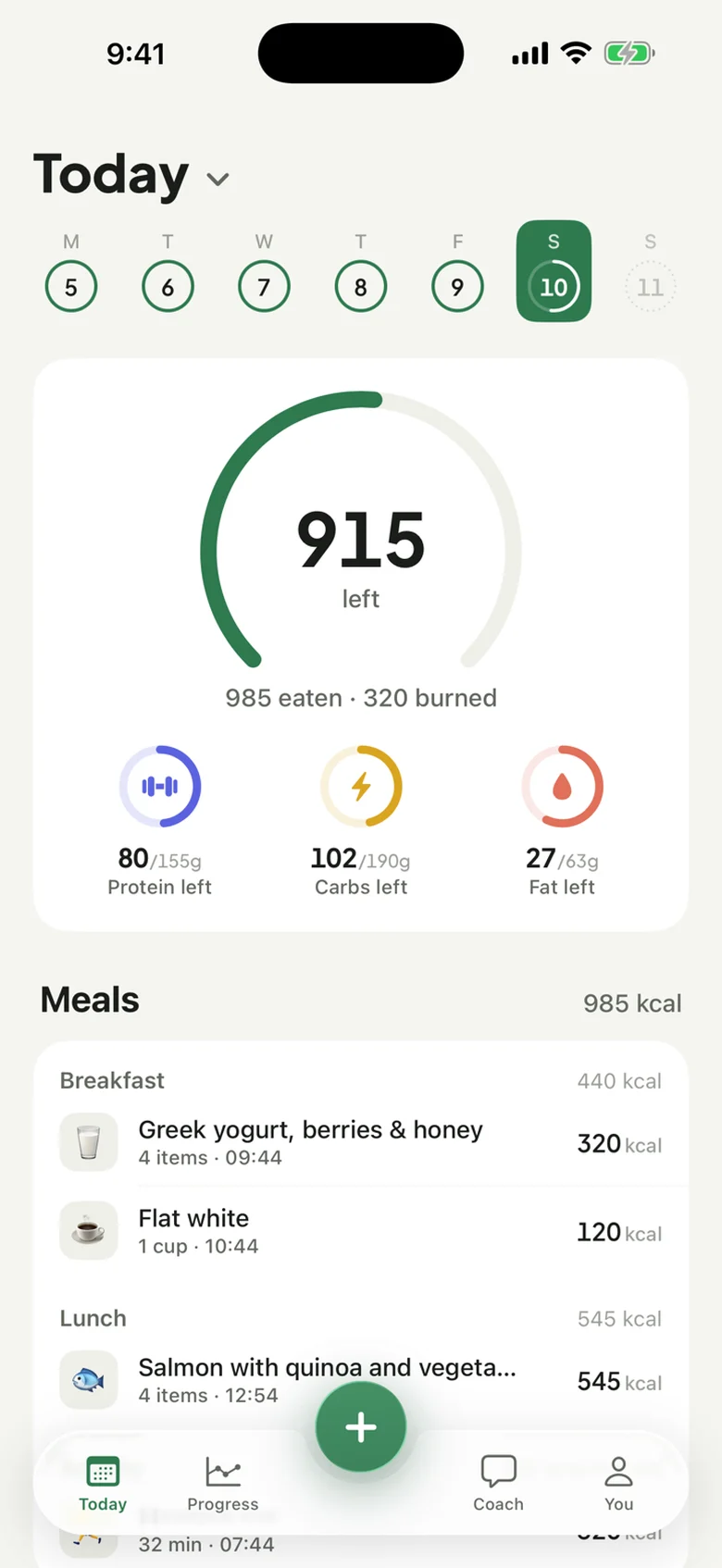
- Log the drinks, honestly. In CutWise you can just say “three pints of lager” or “two large glasses of red”. The point isn’t guilt; it’s seeing the real number once, so you can decide what it’s worth.
- Choose the lower-calorie version of what you like. A spirit with a diet mixer is about 56 kcal; a pint of 4% lager is about 181. Lower-strength beer and smaller wine glasses cut both units and calories.
- Alternate with water, and eat a proper, protein-rich meal before you go out rather than relying on what’s there at midnight.
- Plan the next morning. Decide on breakfast before the night out. The hungover fry-up is often bigger than the drinks.
- Don’t compensate by skipping meals. Saving calories all day for drinks leaves you drinking on an empty stomach, which makes the evening harder to steer.